
Category: Indian Sweets & Desserts
Cuisine: Maharashtrian
Author: Vikram Joshi
Preparation Time: 30 minutes
Cooking Time: 45 minutes
Resting Time: 30 minutes
Total Time: 1 hour 45 minutes
Servings: 10–12 puran polis
Diet: Vegetarian
Puran Poli Recipe
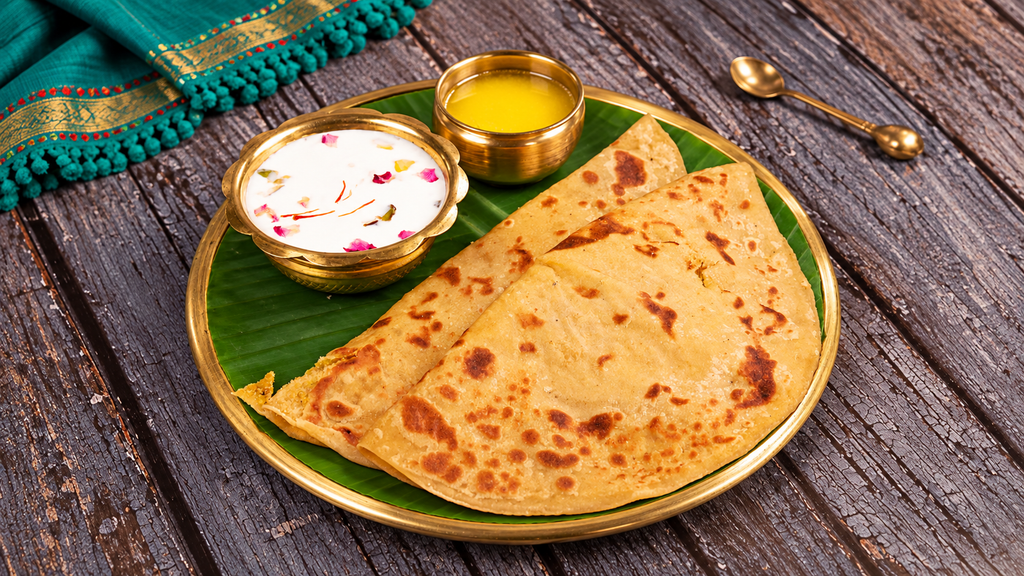
Puran poli is a traditional Maharashtrian sweet flatbread prepared with a soft wheat-flour dough and a flavourful filling of chana dal, jaggery, cardamom and nutmeg. It is commonly made during Holi, Gudi Padwa, Ganesh Chaturthi and other festive occasions.
The sweet lentil filling is known as puran, while the outer flatbread is called poli. A good puran poli should be soft, evenly filled and easy to tear without becoming dry or chewy. It tastes wonderful when served warm with ghee, milk or a savoury Maharashtrian curry.
This homemade puran poli recipe explains how to prepare a smooth filling, make a flexible dough and roll each poli without breaking it.
Ingredients
For the puran filling
- 1 cup chana dal
- 3 cups water, for pressure cooking
- 1 cup grated or finely chopped jaggery
- ½ teaspoon cardamom powder
- ¼ teaspoon nutmeg powder
- 1 tablespoon ghee
- A small pinch of salt
For the dough
- 1½ cups whole-wheat flour
- ½ cup all-purpose flour
- ¼ teaspoon turmeric powder, optional
- ¼ teaspoon salt
- 2 tablespoons oil
- Approximately ¾ cup water, as required
For cooking and serving
- Ghee, as required
- Dry flour, for rolling
- Warm milk, optional
How to Make Puran Poli
Step 1: Wash and soak the chana dal
Rinse the chana dal under running water until the water becomes mostly clear. Soak it in enough water for approximately 30 minutes.
Soaking helps the dal cook evenly and reduces the overall cooking time.
Step 2: Cook the dal
Drain the soaked dal and transfer it to a pressure cooker. Add three cups of fresh water.
Pressure-cook the dal over medium heat for approximately four to five whistles. Allow the pressure to release naturally before opening the cooker.
The dal should be completely cooked but should not become watery or excessively mushy.
Step 3: Drain excess water
Place a strainer over a large bowl and drain the cooked dal. Leave it in the strainer for five to ten minutes so that the excess liquid is removed.
Do not discard the drained dal water. It can be seasoned and used to prepare traditional katachi amti or added to soups and dals.
Step 4: Cook the puran
Transfer the drained dal to a thick-bottomed pan. Add the grated jaggery and mix well.
Cook over low to medium heat. The jaggery will melt and make the mixture loose at first. Continue stirring regularly so the filling does not stick to the bottom.
Cook until the mixture becomes thick and begins to leave the sides of the pan. This usually takes approximately 15–20 minutes.
Step 5: Add the flavourings
Add cardamom powder, nutmeg powder, ghee and a small pinch of salt. Mix everything thoroughly and cook for another minute.
Turn off the heat and allow the filling to cool completely.
Step 6: Make the filling smooth
Pass the cooled mixture through a traditional puran yantra if available. Alternatively, blend it briefly in a food processor or mash it thoroughly with a potato masher.
The puran should be smooth, soft and firm enough to hold its shape. Divide it into 10–12 equal balls and keep them covered.
Step 7: Prepare the dough
Combine whole-wheat flour, all-purpose flour, turmeric and salt in a large mixing bowl.
Add two tablespoons of oil and mix it into the flour. Gradually add water and knead until you have a very soft and flexible dough.
The dough should be softer than regular chapati dough but not sticky. Apply a few drops of oil over it, cover and allow it to rest for 30 minutes.
Step 8: Divide the dough
After resting, knead the dough again for one or two minutes. Divide it into 10–12 equal portions.
Each dough portion should be slightly smaller than its corresponding ball of puran. Using more filling than dough creates a flavourful and evenly stuffed poli.
Step 9: Fill the puran poli
Take one dough portion and shape it into a smooth ball. Flatten it between your palms and roll it into a small circle.
Place one ball of puran in the centre. Bring the edges of the dough together over the filling and pinch them firmly to seal.
Gently flatten the stuffed ball with your fingers.
Step 10: Roll carefully
Dust the stuffed dough lightly with dry flour. Roll it gently into a thin circle measuring approximately 7–8 inches.
Use light, even pressure while rolling. Avoid using too much dry flour because it can make the cooked puran poli dry.
If a small amount of filling comes out, dust the area with flour and continue rolling gently.
Step 11: Cook the puran poli
Heat a tawa or flat pan over medium heat. Carefully place the rolled puran poli on the hot surface.
Cook until small bubbles appear and the underside develops light golden spots. Flip it and cook the other side.
Apply a little ghee, flip again and cook for a few seconds. Remove it from the pan once both sides have light golden-brown patches.
Repeat the process with the remaining dough and filling.
Serving Suggestions
Serve puran poli warm with:
- A generous spoonful of melted ghee
- Warm or chilled milk
- Katachi amti
- Plain yoghurt
- A small bowl of unsweetened coconut milk
- Maharashtrian batata bhaji
Puran poli is naturally sweet, so it pairs particularly well with mildly spicy or savoury dishes.
Important Tips for Soft Puran Poli
- Drain the cooked chana dal thoroughly. Excess water can make the filling sticky and difficult to roll.
- Cook the puran until it is thick enough to form a ball after cooling.
- Allow the filling to cool completely before stuffing it into the dough.
- Keep the dough soft and rest it for at least 30 minutes.
- Use slightly more filling than dough for a well-stuffed puran poli.
- Roll with gentle and even pressure to prevent the filling from escaping.
- Cook over medium heat. Very high heat may burn the exterior before the dough cooks properly.
- Keep the cooked puran polis covered with a clean kitchen towel to preserve their softness.
- Add ghee just before serving if you prefer not to use it while cooking.
How to Check Whether the Puran Is Ready
Take a small spoonful of the cooked filling and allow it to cool slightly. Try rolling it between your fingers.
If it forms a soft ball without sticking excessively, it is ready. If it spreads or feels wet, continue cooking it for a few more minutes.
Avoid overcooking the mixture because it may become dry and crumbly after cooling.
Storage Instructions
Allow leftover puran polis to cool completely before storing them.
Place parchment paper between each poli and keep them in an airtight container. They can be stored at room temperature for up to one day or refrigerated for three to four days.
Reheat them on a warm tawa for approximately 30 seconds on each side. Apply a little ghee after reheating to restore their softness.
The prepared puran filling can also be refrigerated separately for up to three days.
Common Mistakes to Avoid
Filling becomes too wet
This usually happens when the cooked dal contains excess water or the jaggery mixture has not been cooked long enough. Return the mixture to the pan and cook it over low heat until it thickens.
Puran poli breaks while rolling
The filling may be lumpy, the dough may be too firm or the stuffed ball may not be properly sealed. Use smooth filling and soft, rested dough.
Puran poli becomes hard
Using excessive dry flour, preparing a stiff dough or cooking for too long can make it hard. Keep the dough soft and remove the poli from the pan as soon as both sides are cooked.
Filling is not evenly distributed
Flatten the stuffed ball gently before rolling. Begin rolling from the centre and move outward with light pressure.
Approximate Nutrition per Puran Poli
- Calories: 280 kcal
- Carbohydrates: 51 g
- Protein: 7 g
- Fat: 6 g
- Fibre: 5 g
- Sugar: 19 g
Nutritional values are estimates and may vary depending on the size of each puran poli and the amount of ghee used.
Frequently Asked Questions
Can I make puran poli using only whole-wheat flour?
Yes. Replace the all-purpose flour with an equal amount of whole-wheat flour. The result may be slightly denser, so knead the dough until very soft and allow sufficient resting time.
Why is my puran filling sticky?
The dal may contain excess water, or the filling may need additional cooking. Cook it over low heat while stirring until it becomes thick and begins to leave the sides of the pan.
Can I prepare the filling in advance?
Yes. Prepare the puran, cool it completely and refrigerate it in an airtight container for up to three days. Bring it close to room temperature before stuffing.
Can puran poli be made without ghee?
Yes. Use a neutral cooking oil while preparing the dough and cook the polis on a dry tawa. However, ghee adds a traditional aroma and richer flavour.
What can I do with the drained dal water?
Use it to make katachi amti, a spiced Maharashtrian curry traditionally served with puran poli. It can also be added to soups, dals or vegetable gravies.
Is puran poli served hot or cold?
It can be enjoyed at room temperature, but it tastes best when served warm with a little melted ghee.
Final Thoughts
Making puran poli requires a little patience, particularly when cooking the filling and rolling the stuffed dough. Once the consistency of the puran and dough is correct, the remaining process becomes simple.
These soft, aromatic and generously filled puran polis are ideal for festive meals, family gatherings or a traditional homemade dessert
Author Details
Vikram Joshi shares approachable Indian recipes with clear instructions and practical cooking tips. His recipes focus on familiar ingredients, traditional flavours and reliable methods suitable for everyday home kitchens.

